
Things to Do in Hanamaki Onsen and Hanamaki
Start with a bath in Yumoto on a short visit to Hanamaki Onsen. With a full day, you can also explore Miyazawa Kenji’s story worlds or the town’s sake-making history.
Yumoto’s garden and woodland walk
Between baths, you can walk from the resort hotels into gardens and woods. The Rose Garden has more than 6,000 plants from about 450 varieties. Roses grow around a fountain, and the grounds also have a greenhouse and a sundial flowerbed designed by Kenji.
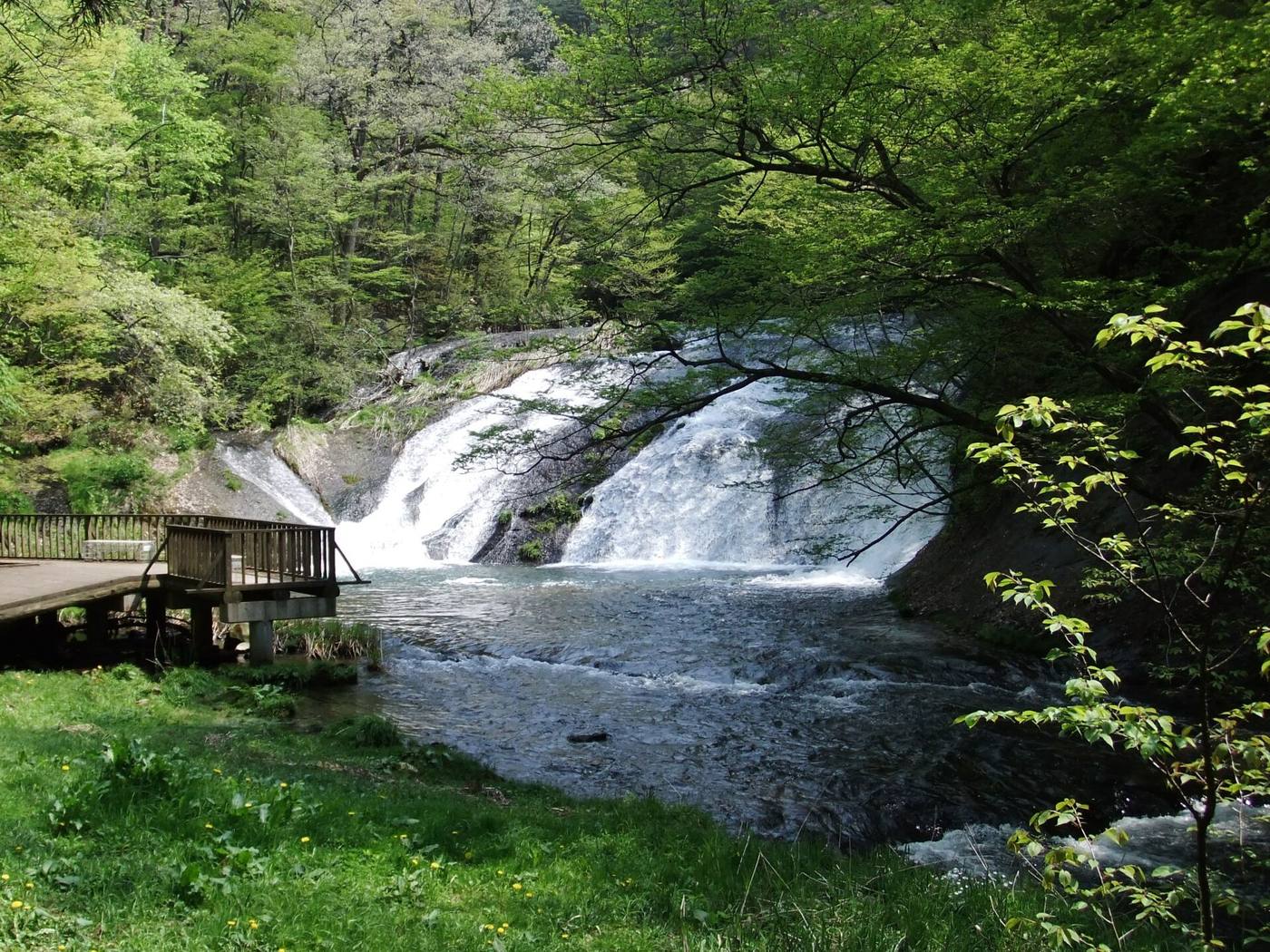
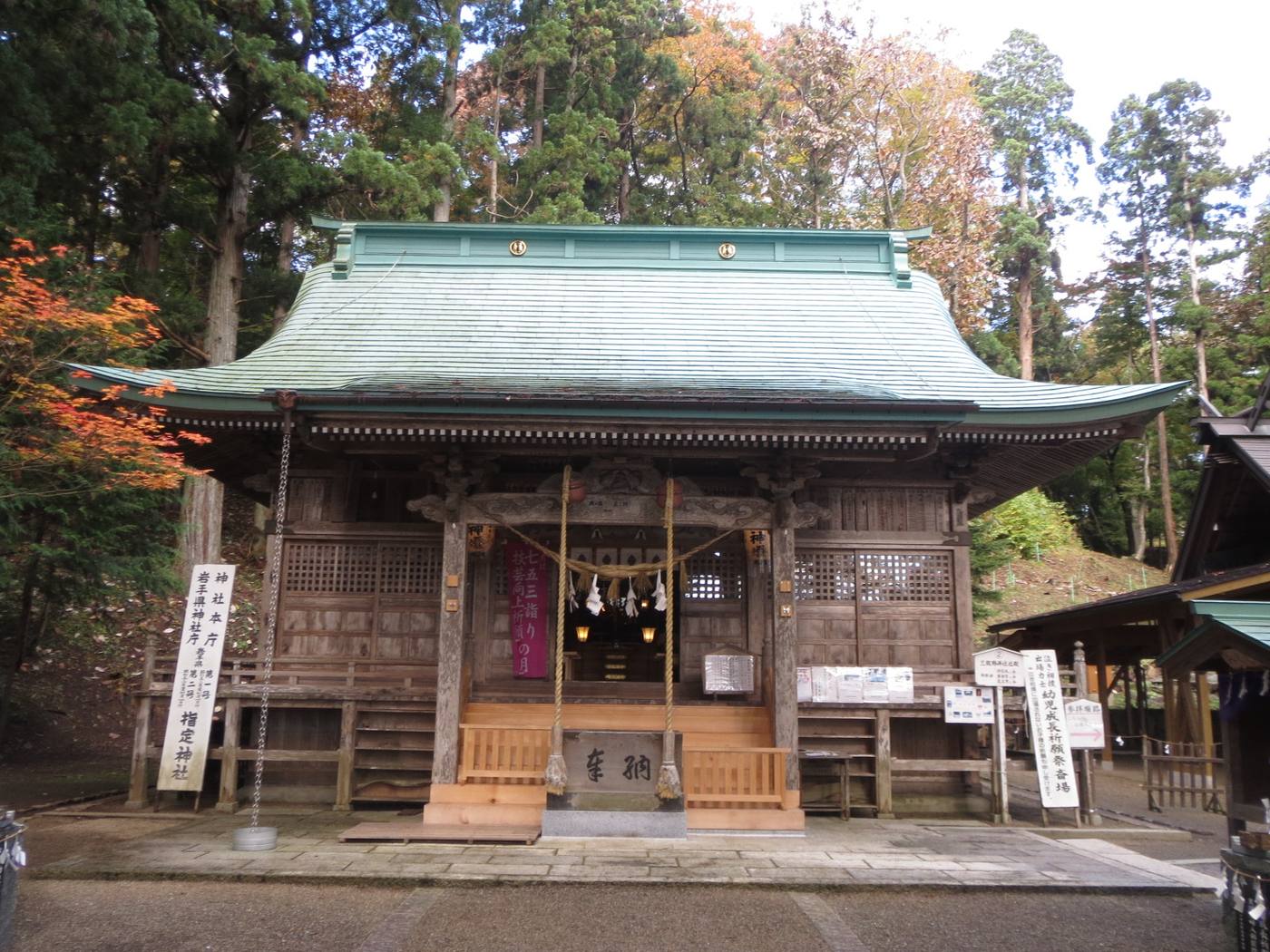
Kamabuchi Falls is about ten minutes on foot from the hotels. Water fans into streams across a rock 8.5 meters high and 30 meters wide. You can follow a woodland loop around the falls in about twenty minutes. Opposite Senshukaku, a row of torii marks the entrance to Hanamaki Onsen Shrine.
Outings by bus
You can walk to the Rose Garden, Hanamaki Onsen Shrine and Kamabuchi Falls from the Yumoto hotels. For sights farther away, the public Hanamaki Onsen Line bus goes to Hanamaki Station.
| Leg | Travel time |
|---|---|
| Yumoto → Hanamaki Station, Hanamaki Onsen Line | About 20 minutes |
| Hanamaki Station → Kenji Kinenkan-guchi, Tsuchizawa Line | About 17 minutes |
| Kenji Kinenkan-guchi → Dowa Mura | Five minutes on foot |
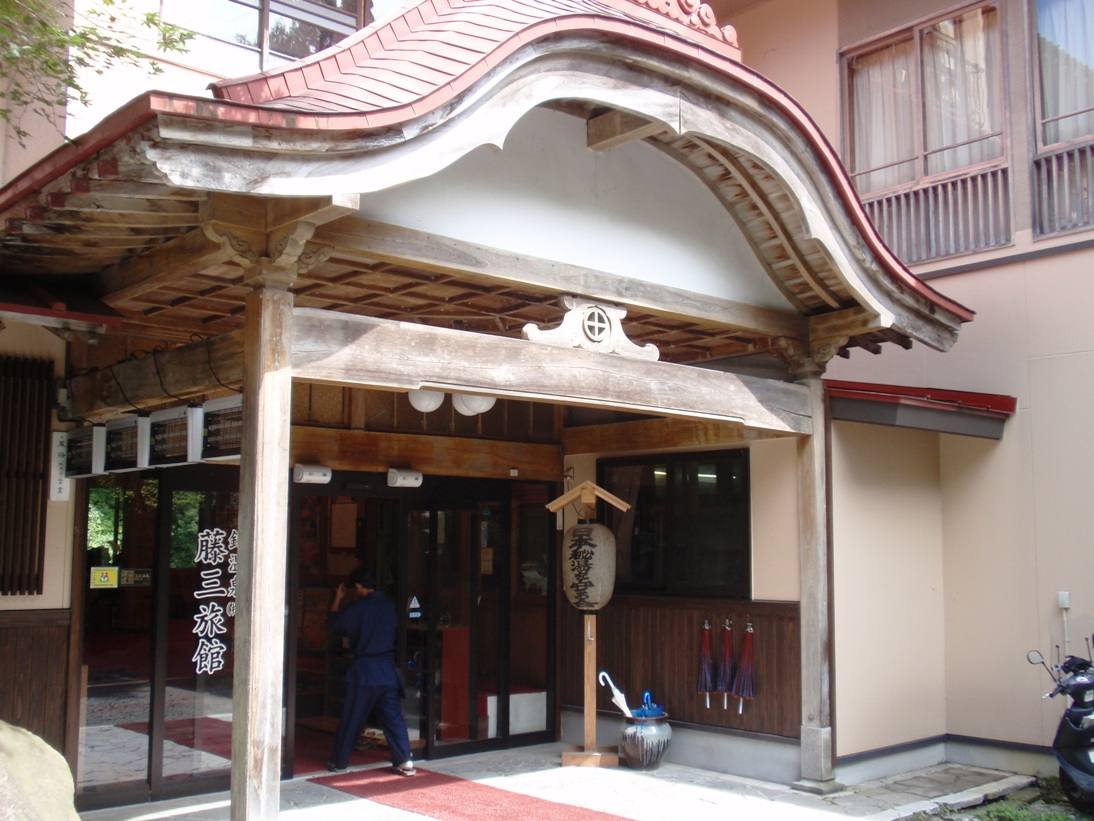
The Yumoto–Hanamaki Station bus costs ¥510 (about US$3.20) per adult each way. The times above cover each leg; allow for the wait between buses at Hanamaki Station. Koyokan also runs a free station shuttle for overnight guests. Reserve the arrival shuttle from Hanamaki or Shin-Hanamaki before your two-night stay.
Day baths
The Hanamaki Onsenkyo villages lie along different valleys. Day visitors can travel to the baths by public bus, taxi or car. Admission covers one property.
Koyokan in Yumoto
Koyokan has an outdoor rock pool with views of the seasonal scenery, individual soaking tubs and a cooling terrace. Day visitors can bathe during scheduled morning and afternoon or evening windows. Koyokan closes its baths for cleaning between these day-bathing windows.
- Adult admission, weekdays: ¥1,200 (about US$7.60).
- Adult admission, weekends, public holidays and special dates: ¥1,500 (about US$9.50).
Osawa on the Toyosawa River
You bathe beside the river in Osawa’s open-air pool. The pool is mixed bathing except during the evening women-only hour. That hour is suspended in summer horsefly season.
Adult admission: ¥700 (about US$4.50).
Namari’s standing bath
At Namari, you stand in a hand-carved rock pool averaging 1.25 meters deep. Men and women share the bath outside the women-only sessions.
Adult admission: from ¥800 (about US$5.10).
Miyazawa Kenji’s story world
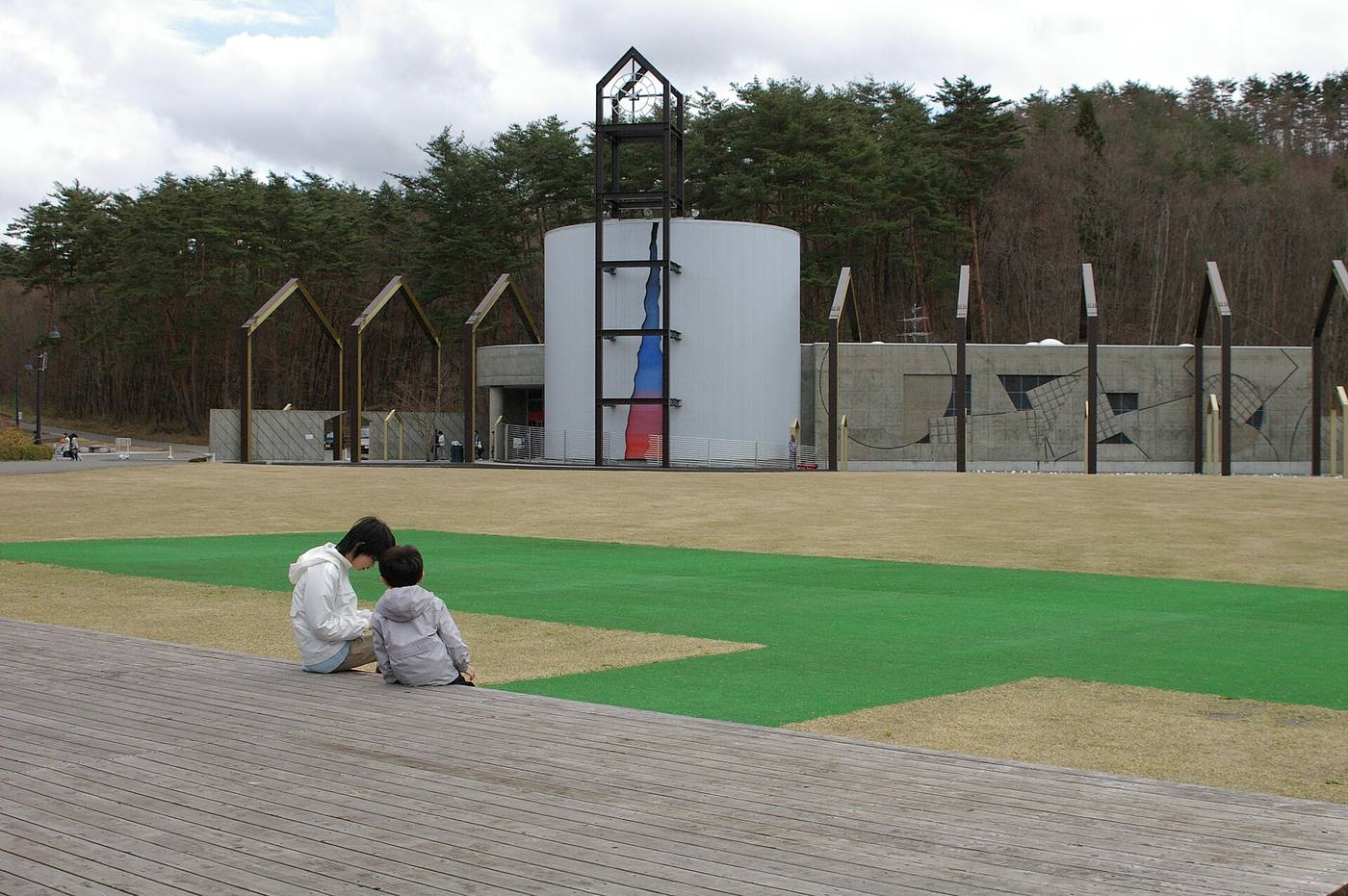
Dowa Mura has exhibitions and outdoor spaces based on Kenji’s fairy tales. From Galaxy Station, you can follow the fairy path into grounds with a sky square and wildflower garden. Inside Kenji’s School, you pass through Fantastic Hall and rooms devoted to Space, Sky, Earth and Water. The Classrooms occupy log houses.
- Classrooms and grounds: free entry.
- Kenji’s School: ¥350 (about US$2.20) per adult.
- Hours: 9:00–16:30.
- Closures: Mondays, New Year and maintenance dates, with holiday exceptions.
From Shin-Hanamaki Station, Dowa Mura is about three minutes by car or two minutes by bus and a five-minute walk. The neighboring Memorial Museum displays Kenji’s belongings and manuscripts. Its exhibitions cover his poetry, teaching, agriculture and science. From the bus stop, you climb 367 stairs to the Memorial Museum.
Sake-making and umbrella craft
At Ishidoriya Roadside Station, the Nanbu Toji Museum keeps the old brewing tools in a rebuilt earthen-walled storehouse; among them is a fermentation vat about two meters across. You can watch videos about the region’s brewing history and sake-making.
- Museum admission: free.
- Paid tastings: cash only, until 4 pm.
- Museum closing time: 4:30 pm.
- Closed: December 29–January 1.
The roadside station is about 15 minutes by car from Hanamaki Onsen. The neighboring history museum remains closed.
At Hanamaki’s wall-hanging umbrella workshop, you make an umbrella in approximately an hour. Umbrella makers have worked in Hanamaki for more than 200 years. You can choose Narushima washi paper or paint your umbrella.
Sculpture and painting around Hanamaki
Takamura’s museum displays sculptures including Hand, calligraphy, manuscripts and Chieko’s paper pictures. The poet’s late-life cottage stands in the same grounds, about twenty minutes by car from Hanamaki Station.
At Narushima, the 4.3-meter Bishamonten was carved from a single zelkova trunk. The statue stands against a flame-decorated halo, with the oni Niranba and Biranba on either side. Farther east, the Yorozu Tetsugoro Museum is in the painter’s birthplace of Tsuchizawa. Its collection includes oils, ink paintings and drawings, as well as notebooks, letters and photographs.
Iwate day trips and guided outings
In Hiraizumi, gold leaf covers Chusonji’s Konjikido inside and out. At Motsuji, stones around the pond resemble rocky shores. Local trains run directly from Hanamaki Station to Hiraizumi in about 47 minutes. Travel from your hotel to Hanamaki Station and onward from Hiraizumi Station takes additional time.
In Tono, you can visit folklore museums and relocated Nanbu magariya farmhouses, where people once lived under the same roof as their horses. You need local buses to reach the rural stops. In Morioka, you can walk beside castle walls built from local granite, explore riverside streets and eat the city’s noodle dishes.
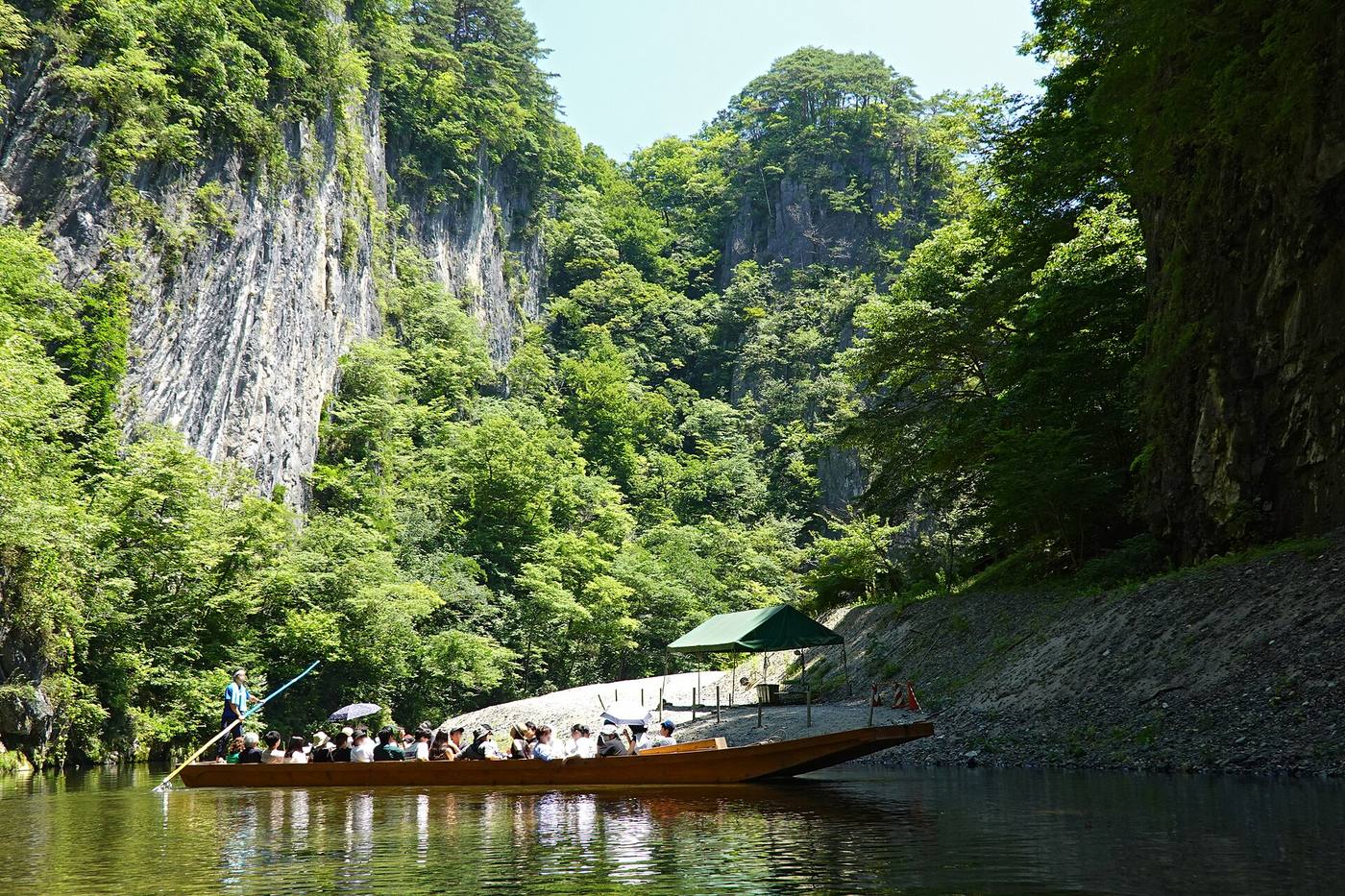
On the two-day Hanamaki Kenji and Tono guided tours, you travel north from Tokyo to literary and folklore sites. Sekinoichi and Iwate Meijo run brewery tours with tastings. From Ichinoseki, a guide takes you to Yugen Cave and Geibikei Gorge for a ride in a flat-bottomed wooden boat.
Reviewed: