
Hiraizumi Day Trip from Hanamaki Onsen
Spend a full day at Motsuji and Chusonji, Hiraizumi’s Buddhist gardens and temples built to represent the Pure Land. From Hanamaki Onsen, take a bus to the station before boarding the train.
Hiraizumi’s World Heritage landscape
Chusonji, Motsuji, the Kanjizaio-in and Muryoko-in remains, and Mt Kinkeisan are Hiraizumi’s five World Heritage sites. They were inscribed in 2011. At the temple grounds, gardens and archaeological sites, you can see how people shaped a twelfth-century religious landscape. Open spaces and surviving foundations are as much a part of it as the buildings. Takkoku no Iwaya is another temple nearby, outside the inscribed group. Its hall stands against a cliff, beyond the route between Motsuji and Chusonji.
Getting to Hiraizumi
Via Hanamaki Station
- From Yumoto, take the Hanamaki Onsen Line public bus to Hanamaki Station.
- At Hanamaki Station, board a southbound JR Tohoku Main Line local for Hiraizumi. Stay on the same train to Hiraizumi Station.
| Stage | Departure–arrival | Time |
|---|---|---|
| Bus: Yumoto → Hanamaki Station | 07:45–08:04 | 19 minutes |
| At Hanamaki Station | Between bus arrival and train departure | 34 minutes, including station access |
| Local train: Hanamaki → Hiraizumi | 08:38–09:20 | 42 minutes on the train |
The train ride is only part of the journey from the onsen. Walking from your hotel to the Yumoto bus stop and onward from Hiraizumi Station takes additional time. The bus costs ¥510 (about US$3.20) per adult each way. Buy the rail ticket separately.
| Route | Departure–arrival |
|---|---|
| Yumoto → Hanamaki Station | 08:55–09:14 |
Via Shin-Hanamaki and Ichinoseki
- Reserve your hotel’s shuttle to Shin-Hanamaki Station.
- At Shin-Hanamaki Station, board a southbound Tohoku Shinkansen for Ichinoseki. The ride takes roughly thirty minutes.
- At Ichinoseki Station, change to a northbound Tohoku Main Line local for Hiraizumi. That ride takes about nine minutes.
Allow time between services at both stations. The two rail ride times exclude the shuttle and station waits.
Motsuji’s pond garden
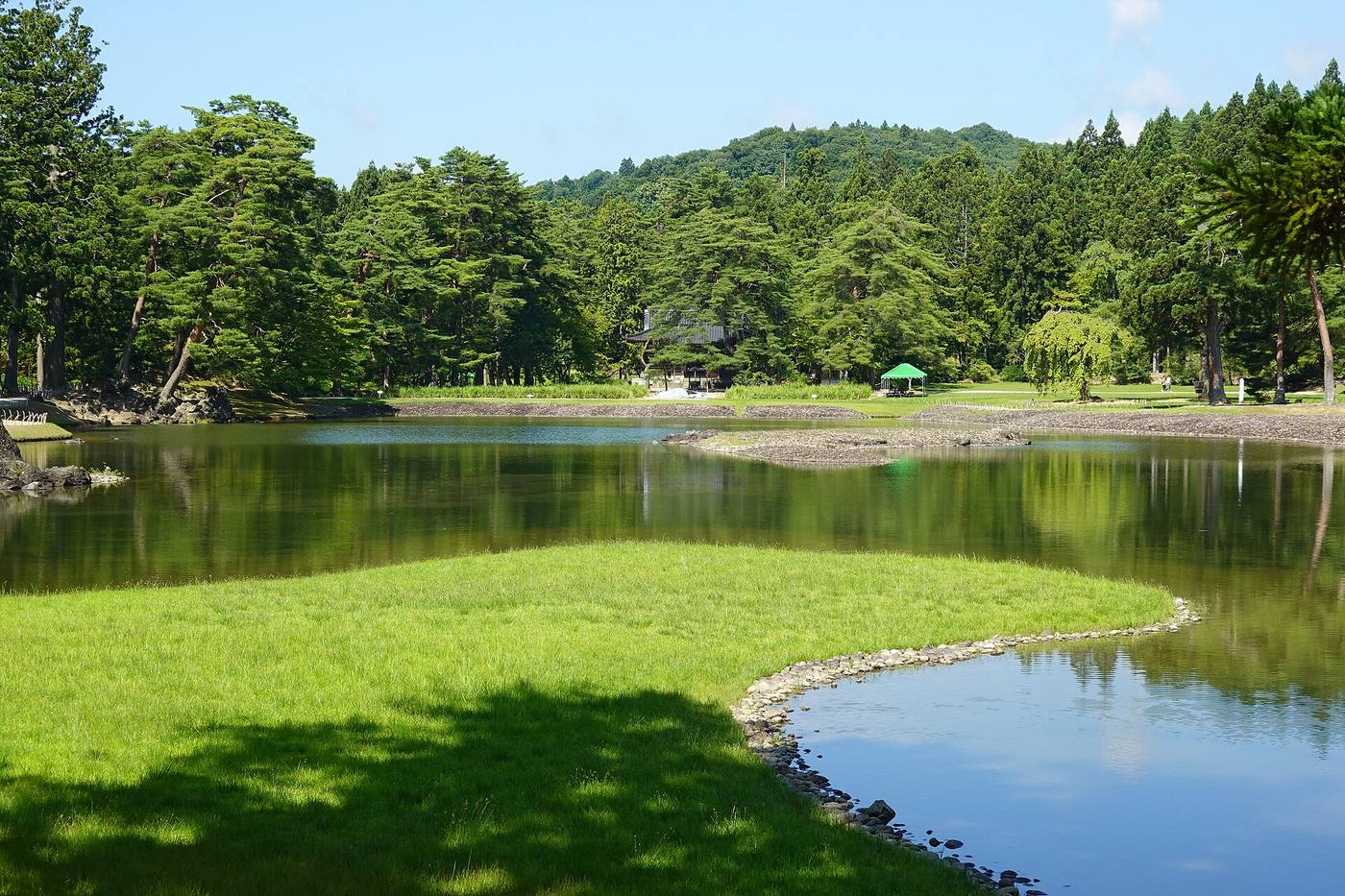
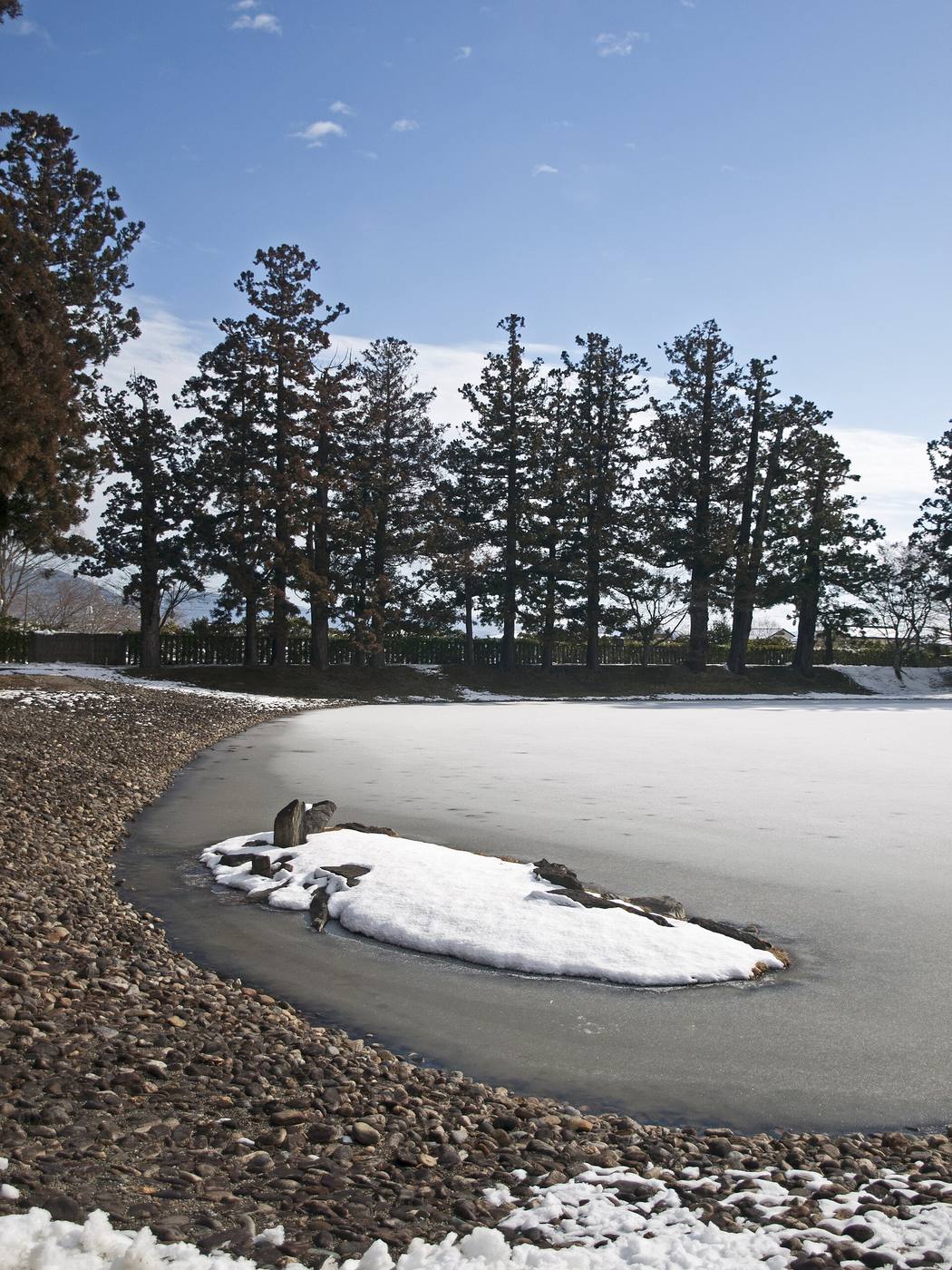
Oizumi ga Ike lies at the center of Motsuji’s garden, with the low hill of Doyama behind it to the north. Along the pond, stones suggest beaches and rocky coasts. An upright rock and a dry-landscape hill rise above the shoreline. Water flows into the pond through a yarimizu feeder stream. Heian-period foundation stones mark the vanished temple buildings. The present main hall and Cultural Assets Repository stand within the grounds.
From Hiraizumi Station, walk 0.7 kilometers to Motsuji in about seven minutes.
| Visitor | Admission |
|---|---|
| Adult | ¥700 (about US$4.50) |
| High-school student | ¥400 (about US$2.50) |
| Elementary or junior-high pupil | ¥200 (about US$1.30) |
| Season | Hours |
|---|---|
| March 5–November 4 | 08:30–17:00 |
| November 5–March 4 | Opens 08:30; closes 16:30 |
Chusonji and Konjikido
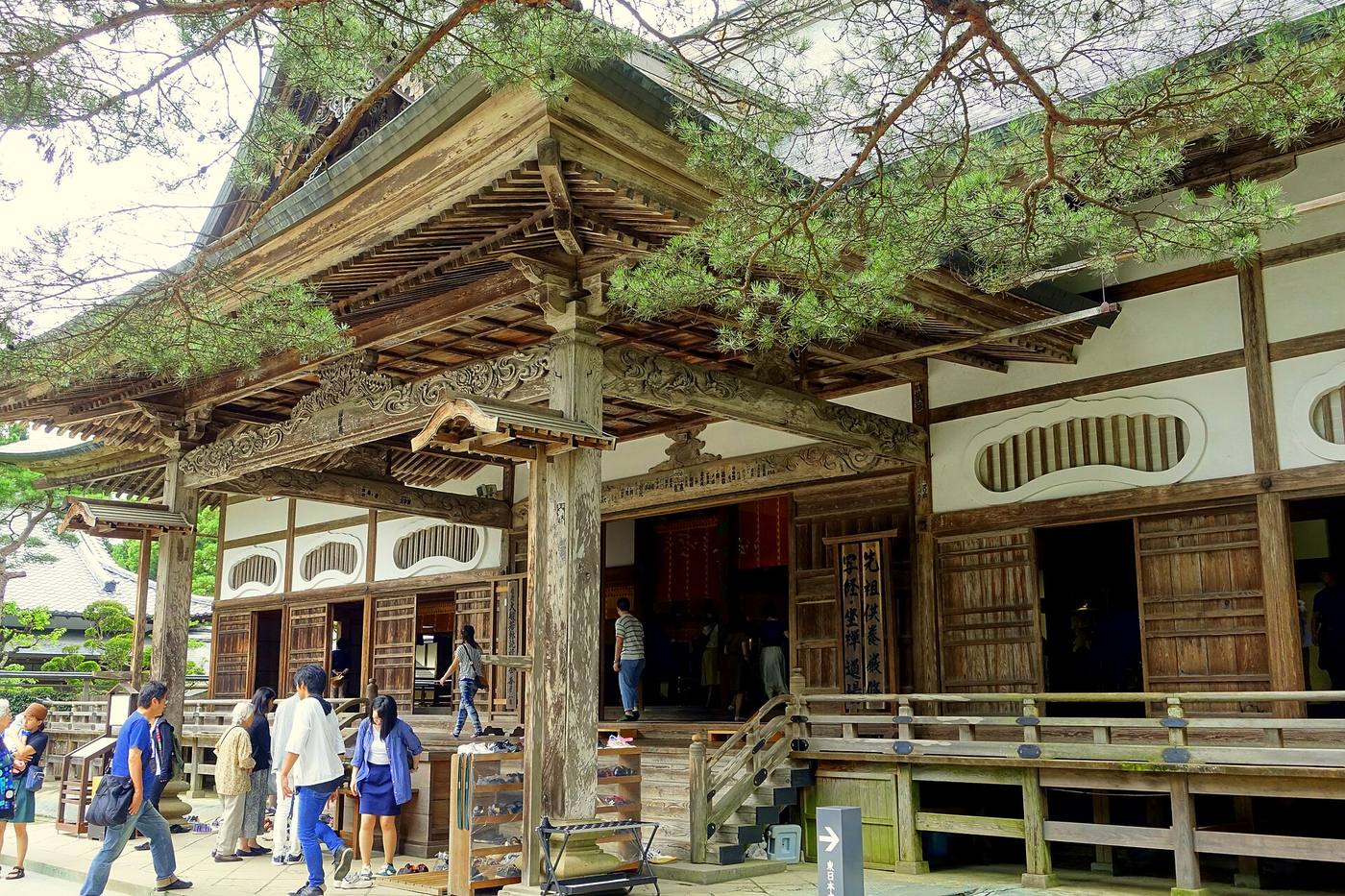
Old cedars planted by the Date domain in the Edo period shade both sides of Tsukimizaka. From the foot of this uphill path, walk 560 meters to Chusonji’s main hall or 800 meters to Konjikido. In autumn, Japanese maples color the stretch from Dainichido toward the gold hall and the sutra repository.
Konjikido dates to 1124. Gold leaf covers its exterior and interior. Inside the sanctuary, the altar is decorated with mother-of-pearl from yakogai shells, ivory and gemstones. Amida sits at the center, flanked by Kannon and Seishi. The sanctuary also holds six Jizo figures, Jikokuten and Zochoten. The viewing ticket includes the Sankon-zou treasures, Kyozo and the old covering hall.
| Visitor | Admission |
|---|---|
| Adult | ¥1,000 (about US$6.40) |
| High-school student | ¥700 (about US$4.50) |
| Junior-high pupil | ¥500 (about US$3.20) |
| Elementary pupil | ¥300 (about US$1.90) |
| Season | Hours |
|---|---|
| March 1–November 3 | 08:30–17:00 |
| November 4–February’s end | 08:30–16:30 |
Ticket sales end ten minutes before closing. Allow time to walk uphill from the bus stop before buying your ticket.
The Run Run bus
The Run Run bus travels in one direction around Hiraizumi Station, Motsuji, the Heritage Center, Chusonji, Takadachi and Muryoko-in.
| Service | Days and times |
|---|---|
| Operating days | April 11–November 29: weekends and public holidays. Also daily August 13–16. |
| Hiraizumi Station departures | Every thirty minutes, 10:15 to 16:15 |
| Last return from Chusonji | Leaves 16:25; arrives at Hiraizumi Station 16:35 |
| Ticket | Price |
|---|---|
| Adult single ride | ¥200 (about US$1.30) |
| Child single ride | ¥100 (about US$0.60) |
| Day pass | ¥550 (about US$3.50) |
Adults pay less for two single rides than for a day pass. From the third ride, the pass costs less. On ordinary weekdays, walk 1.6 kilometers between Motsuji and Chusonji or take a taxi. The regular Ichinoseki–Hiraizumi bus has its own tickets and fares.
Returning to Hanamaki Onsen
Northbound local trains run from Hiraizumi to Hanamaki without a change.
| Route | Departure–arrival |
|---|---|
| Hiraizumi → Hanamaki | 15:52–16:33 |
| Hiraizumi → Hanamaki | 16:35–17:17 |
| Hiraizumi → Hanamaki | 17:28–18:12 |
| Day | Departure–arrival |
|---|---|
| Weekday connection from the first train | Leaves 16:53; arrives 17:13. Twenty minutes between train arrival and bus departure. |
| Weekend bus | 16:23–16:43; use a weekend train schedule for the connection |
Reserve the hotel shuttle ahead of travel. Hotel Koyokan has a free shuttle serving Hanamaki and Shin-Hanamaki stations for the rail journey to the temples.
You can walk from the resort hotels to Yumoto’s gardens and falls. The woodland loop around Kamabuchi takes about twenty minutes.
Takkoku no Iwaya
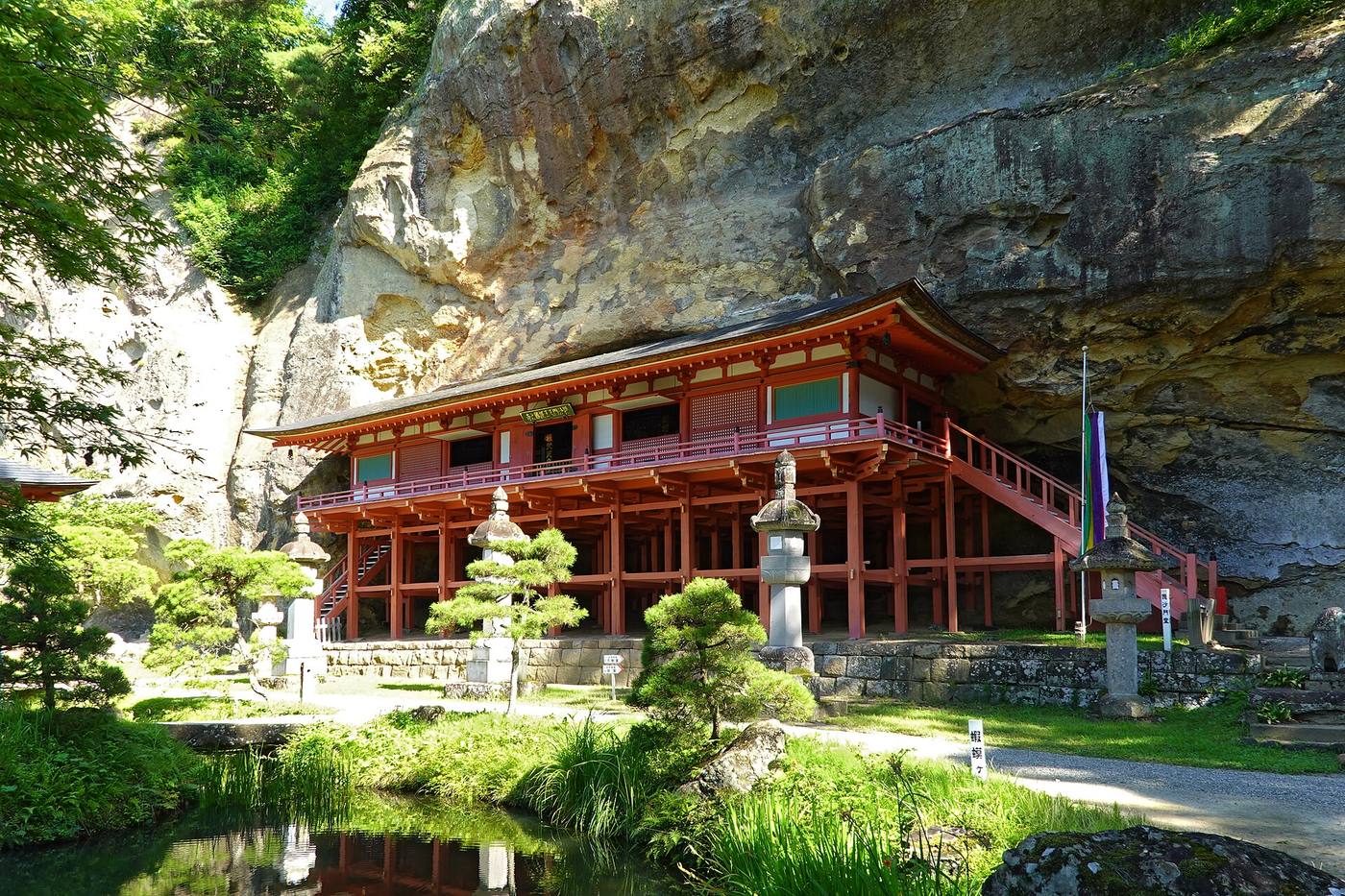
Bishamondo stands on supports against the cave and cliff at Takkoku no Iwaya. The present hall dates to 1961. It was rebuilt after a fire in 1946. West of Bishamondo, a Buddha is carved into a cliff about 33 meters high. The Buddha’s lower body collapsed in the 1896 earthquake. The late-Heian Himemachi Fudo figure is carved from one piece of katsura wood.
Takkoku no Iwaya is about six kilometers from Hiraizumi Station, beyond the Run Run bus route. A taxi takes about ten minutes. Allow roughly thirty minutes at the temple.
| Visitor | Admission |
|---|---|
| Adult | ¥500 (about US$3.20) |
| High-school or junior-high student | ¥200 (about US$1.30) |
| Elementary pupil | Free, except on educational trips |
| Season | Hours |
|---|---|
| March 1–November 5 | 08:00–17:00 |
| Winter | 08:00–16:30 |
Reviewed: