
Namari Onsen: Standing Bath & Ryokan
Stay overnight at Namari for the deep standing bath and Fujisan Ryokan’s old wooden inn. You can also visit the baths for the day.
The standing and riverside baths
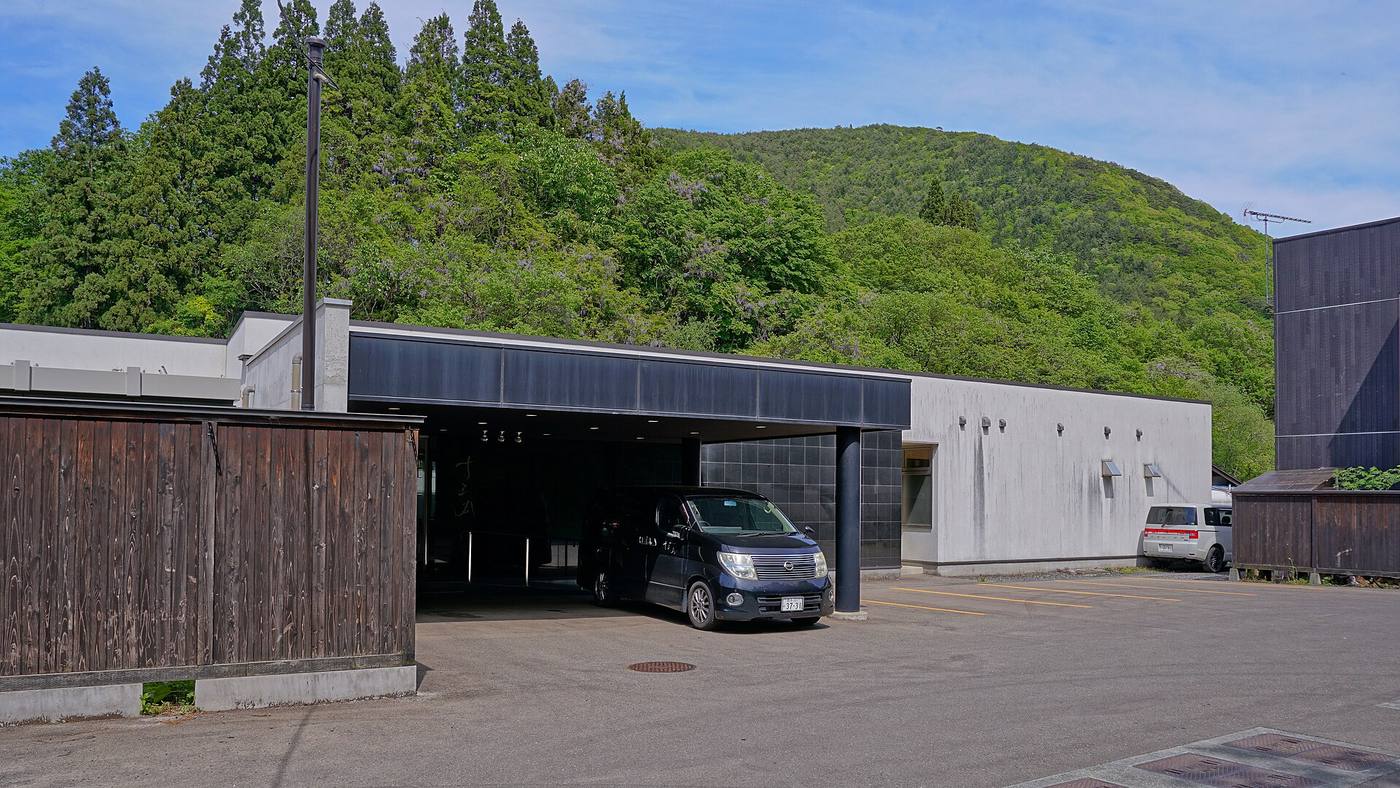
Bathers stand in White Ape Bath, or Shirozaru no Yu, a pool carved by hand from natural rock. The pool averages 1.25 meters deep. Shorter visitors and children need to take that depth into account. Men and women share White Ape Bath outside the women-only periods.
| Regular women-only period | Who can use it |
|---|---|
| 06:00–07:00 | Overnight guests |
| 11:00–13:00 | Day visitors and overnight guests; no midday session on Fridays |
| 20:00–22:00 | Overnight guests for the full session; day visitors until 21:00 if admitted by 20:00 |
Friday exception: White Ape Bath closes for cleaning from 10:00–14:00. There is no midday women-only session on Friday. The morning and evening women-only sessions still run.
At Katsura no Yu, you can bathe outdoors beside the river or indoors in pools divided by sex. Shiraito no Yu is semi-open-air, with windows facing falls that tumble over rock into the Toyosawa River. Men and women use Shiraito no Yu at different times. Nearby Osawa’s river baths include mixed and women-only outdoor pools.
The water
Fujisan Ryokan has five springs and four bathing areas. The simple or alkaline simple spring water emerges at 57°C. That is the source temperature, before the water cools in the baths. The water is mildly alkaline, with a pH range of 8.0–8.5. It flows directly through the baths, without heating, dilution or recirculation. At White Ape Bath, the spring emerges inside the pool.
Namari has simple and alkaline simple water. Yamayuri at Dai has a simple sulfur spring, while two of Hotel Shidotaira’s three springs supply sodium sulfate–chloride water. The Hanamaki hot springs comparison sets the villages side by side.
Day visits
Day visitors can use Fujisan Ryokan’s baths during the hours below. White Ape Bath has its own women-only sessions and Friday closure. At Shiraito, Gin and Katsura, cleaning usually takes place from 09:30–11:00. The daily cleaning schedule can vary.
| Service | Hours | Condition |
|---|---|---|
| Day bathing | 10:00–21:00 | Last admission at 20:00 |
| Saturday and holiday-eve reception | May pause from 14:00–17:00 | Applies to new day-bath admissions |
| Visit day | Adult | Child |
|---|---|---|
| Regular dates | ¥800 (about US$5.10) | ¥600 (about US$3.80) |
| Golden Week, Obon, year-end/New Year and other special dates | ¥1,100 (about US$7) | ¥900 (about US$5.70) |
Meals, private rest rooms and face towels cost extra. Gin is a small bath overlooking summer greenery and autumn foliage. Day visitors and overnight guests have different hours for private bathing at Gin.
| Guests | Private-bathing slots |
|---|---|
| Day visitors | 11:00–15:00 |
| Overnight guests | 15:00–21:00 |
Getting there
From the airport by bus and train
Iwate Hanamaki Airport, Hanamaki-Kuko Station and Hanamaki Station are three different places. Take the airport bus to Hanamaki-Kuko Station. From Hanamaki-Kuko, take a southbound JR Tohoku Main Line train to Hanamaki Station. Leave Hanamaki Station for public-bus stop 3. The Yuguchi Line toward Shin-Namari stops at Namari Onsen before its Shin-Namari terminus.
The connection below is for weekdays in November 2026, excluding Japanese public holidays. The airport-bus timetable is valid October 25–November 30, 2026. The train times are from the November 2026 schedule.
| Leg | Departure | Arrival | Ride time |
|---|---|---|---|
| Airport bus toward Morioka | Iwate Hanamaki Airport 09:55 | Hanamaki-Kuko Station 10:02 | 7 minutes |
| JR Tohoku Main Line local 1534M | Hanamaki-Kuko Station 10:23 | Hanamaki Station 10:28 | 5 minutes |
| Yuguchi Line bus toward Shin-Namari | Hanamaki Station stop 3, 11:15 | Namari Onsen 11:47 | 32 minutes |
You have 21 minutes at Hanamaki-Kuko to reach the train platform. At Hanamaki Station, the 47-minute interval includes leaving the station and finding stop 3. The airport-bus fare is ¥340 (about US$2.20) for adults and ¥170 (about US$1.10) for children.
Public buses back to Hanamaki Station
The operator’s current Yuguchi timetable is effective October 1, 2025. The following last buses pass Namari on their way from Shin-Namari to Hanamaki Station. Both leave before the late women-only bathing session.
| Day | Route start | Board at Namari | Arrival |
|---|---|---|---|
| Weekdays | Shin-Namari 18:45 | Namari Onsen 18:46 | Hanamaki Station stop 5, 19:18 |
| Weekends / public holidays | Shin-Namari 16:30 | Namari Onsen 16:31 | Hanamaki Station stop 5, 17:04 |
Station shuttles for overnight guests
Reserve Fujisan Ryokan’s shuttle by telephone or in the booking remarks. Shin-Hanamaki Station is a different station from Hanamaki-Kuko and Hanamaki. The shuttle takes 55 minutes from Shin-Hanamaki to Fujisan Ryokan, calling at Hanamaki along the way.
| Run | First departure | Second departure | Arrival |
|---|---|---|---|
| Afternoon shuttle | Shin-Hanamaki 15:10 | Hanamaki 15:25 | Fujisan Ryokan 16:05 |
| Afternoon shuttle | Shin-Hanamaki 16:10 | Hanamaki 16:25 | Fujisan Ryokan 17:05 |
| Afternoon shuttle | Shin-Hanamaki 17:10 | Hanamaki 17:25 | Fujisan Ryokan 18:05 |
The shuttle contribution is ¥100 (about US$0.60) each way.
| Departure | First arrival | Final arrival |
|---|---|---|
| Fujisan Ryokan 09:47 | Hanamaki 10:30 | Shin-Hanamaki 10:45 |
Fujisan Ryokan
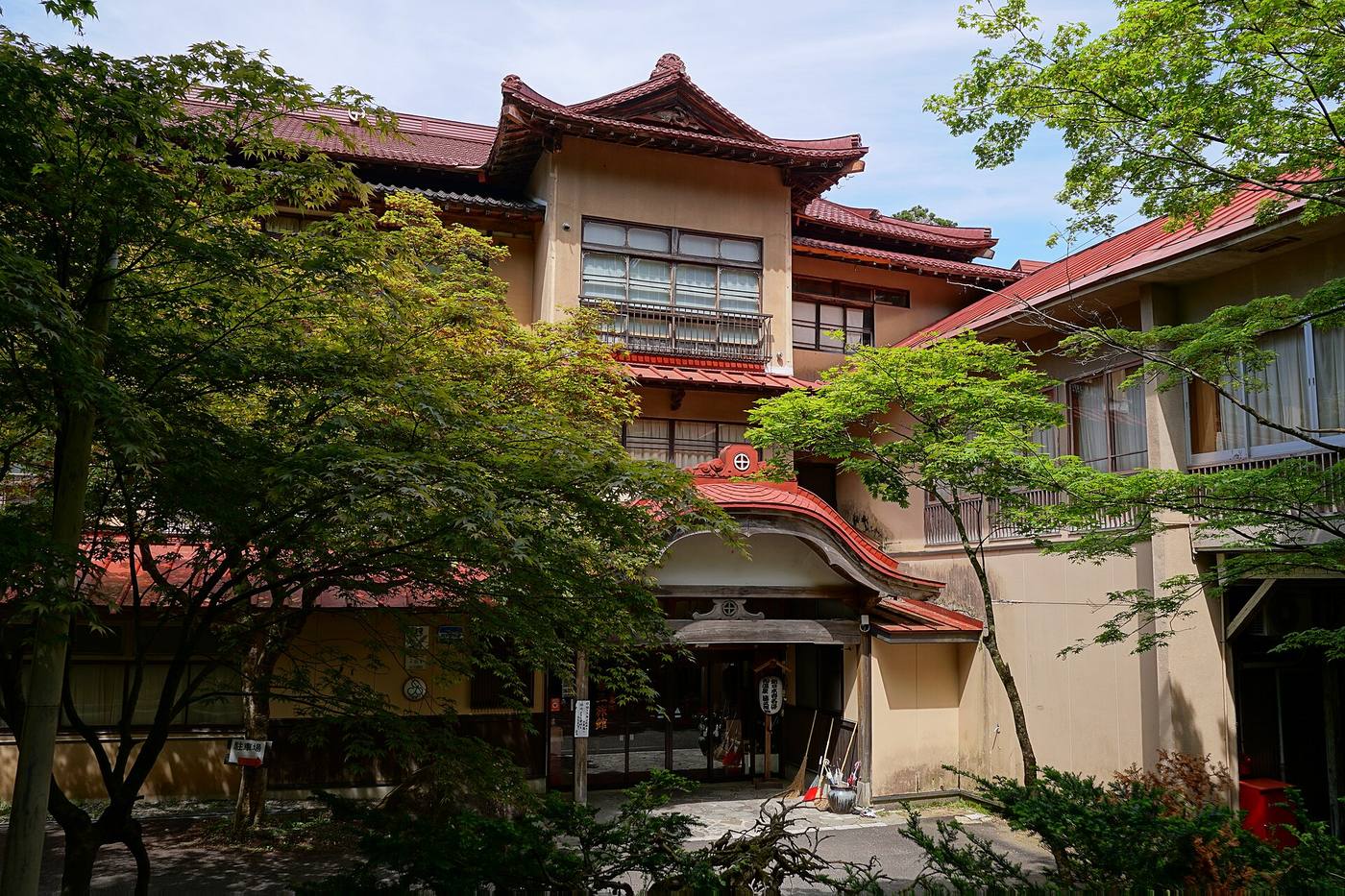
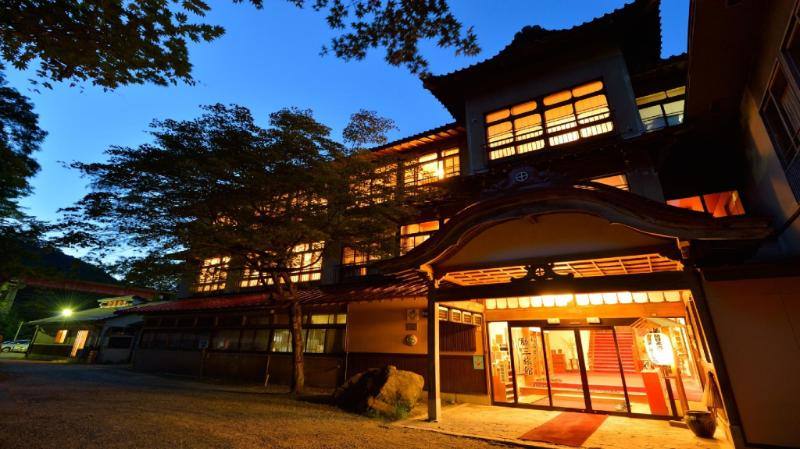
Fujisan Ryokan’s old main building rises three stories beside the Toyosawa River. The inn is built from zelkova timber. Fujisan Ryokan serves local wild vegetables and mushrooms, reduced-pesticide rice and vegetables, and seafood from Sanriku.
Miyazawa Kenji wrote about Namari in The Bears of Mount Nametoko. In Yumoto, the resort hotels stand around gardens and woodland walks.
Namari Onsen Fujisan Ryokan
Stand in Namari’s deep bath, carved by hand from natural rock.
7.4 · 157 Agoda reviews
Reviewed: